
Atlantic Magic
Read Time: 9 mins
ghost-mist glides over river rush,
weathering rock to the cold Atlantic drop.
They move with Mountain energy,
the surge to converge.
Swallows glitch over a pylon’s buzz.
This place is alive.
It’s all around you.
She inhales; a spectral breath,
the distant motorway floods her mind.
She knows.
She is the river.
She is the transitsong.
She is everything.
The veil between worlds falls.
And this is the interface.
−··· ·−· · ·− − ···· ·
> ADVENTURES IN NATURE AND ANCESTOR WORSHIP
Like many people, I’ve had my fair share of mental-health issues: anxiety, burnout, depression and a lovely bout of agoraphobia after losing my job in a new country during the 2008 crash (Go capitalism!). Doom-think has shaped my internal monologue since I was about eleven. I probably didn’t help myself by fiddling with the serotonin valves like a bored cat at the kitchen tap.
On the flip side, I’ve always looked for ways to escape the gnostic dread of the so-called “real world.” I’ve tried everything from Zen and Transcendental Meditation to sweaty, ecstasy-soaked raves and squat parties — dissolving into a giant, pulsating human sponge, a collective oneness I can still feel in my bones.
I try to remain a staunch materialist, something like an open-minded atheist, but when my seven-year-old asks, “Is God real, Dad?” I never know what to say. How do you tell them no when you’ve met God, in the flesh, in a field outside Abingdon?
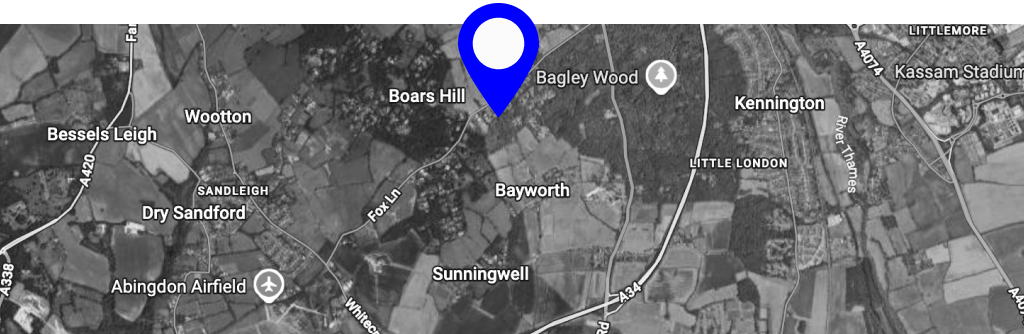
_ Last Known Location of God
> DIGGING IN THE DIRT
I was born in ’81, too young for acid house, but a veteran by the time grime and dubstep took hold. My generation were wannabe acid house heads: embarrassing smiley tees, flags-for-trousers, and a misplaced hauntological nostalgia for a moment glimpsed eight years prior on HTV news. We pieced together our history from worn-out tape packs and older heads recounting Castlemorton or Stonehenge. Children of the post–Criminal Justice Bill era. Old enough to watch Swampy dig his hole, but too young to go to Newbury.
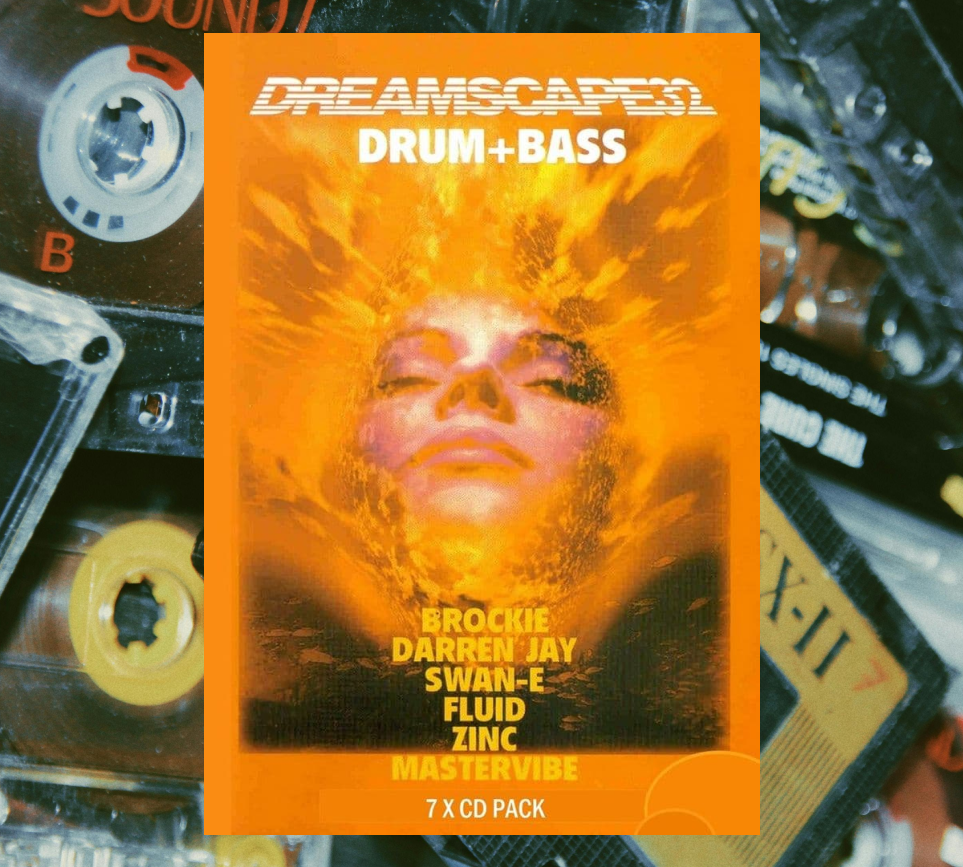
_ Dreamscape 32: My all time favourite Tape Pack
We were true believers in the movement and its scattered ontology, shaped by resistance to suburban suffocation, the police, and capitalism itself — never to be lumped in with the consumer-led super-club sheep. Unity above all: we live as one family. Borders aren’t real.
We listened. We learned. And like our nomadic forbearers, we travelled from place to place in search of hardcore and jungle records of myth, playing them on beer-soaked turntables to uninterested West Country farmers’ sons who assumed we’d be serving up Sandstorm or Bullet in the Gun. We never did.
We were rooted in something older — a lineage that moves through Jamaican sound systems to Brixton, Bristol, Handsworth and beyond; through the discos of New York; into the warehouses of Detroit and Chicago. And, in my own personal cosmos, through the rites and rituals of paganism and druidism — used tentatively, but not without meaning.
After a while, rave history wasn’t enough. More travel was required. Like Sam Beckett, my friends and I spent long nights wormhole-hopping through sampology, moving backwards in time via 16-bit drum breaks: through the Billy Cobham nebula, the Meters belt, the Stax galaxy, and on toward the undisputed truth — an evocation of ancestral spirits; a single bass note plucked from the depths of the cold dark sea by Robbie Shakespeare; a snare drum ringing out in a converted Memphis cinema as we prayed. Looking back, this wormhole-hopping was its own kind of animism: time flattened, chopped, ancestors looped, returning.
_This is record lore.
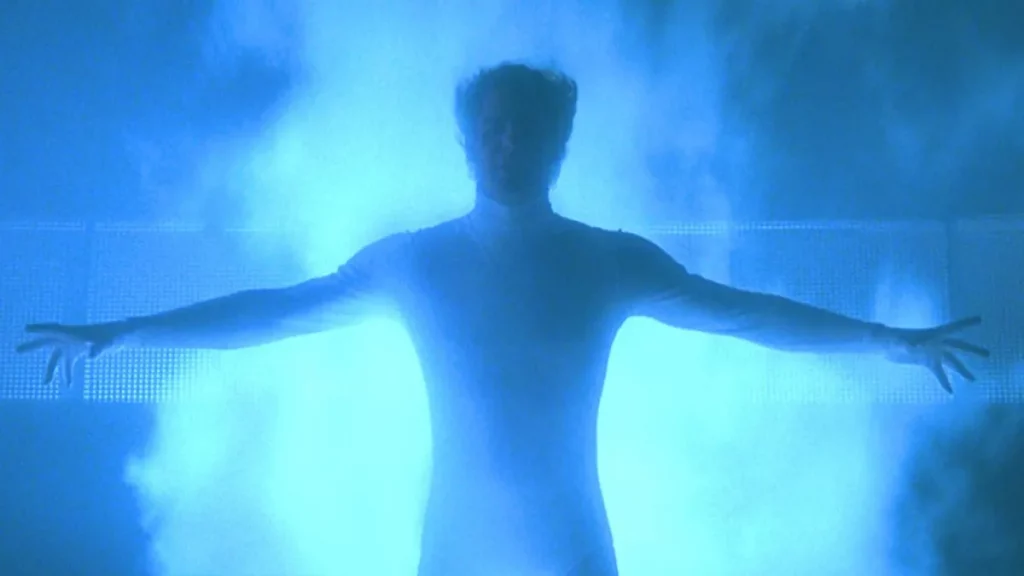
_ Scott Bakula as Sam Beckett in Quantum Leap
> THE INTERFACE
When I first met my best friend, Adman, in the dying days of the last millennium, it was at an old-skool jungle night in Oxford — Kenny Ken on the decks. During the usual cod-pill introductions, Adman lurched into a psychedelic sermon about vinyl: millions of years of plankton dying on the seabed, becoming oil, becoming plastic — summing up, vinyl records were literally our ancestors singing back to us. It took years for me to realise PVC is mostly made of salt, but in a way, the logic still holds. We are all matter, after all.
This concept of interconnectedness brings me enormous peace. The thought that my death will feed the earth in some way gives me a feeling of calm I’ve never found anywhere else. Anxiety has long been my mental co-pilot — always handy when I need reasons not to release music, put on events, write articles, or finish the comic I keep redrawing. In that context, this calm is goldwert.
I like to imagine parts of me ending up in trees, in mycelial networks, in a dog’s belly, or maybe as a grain of salt pressed into a vinyl record.
_This is the interface.
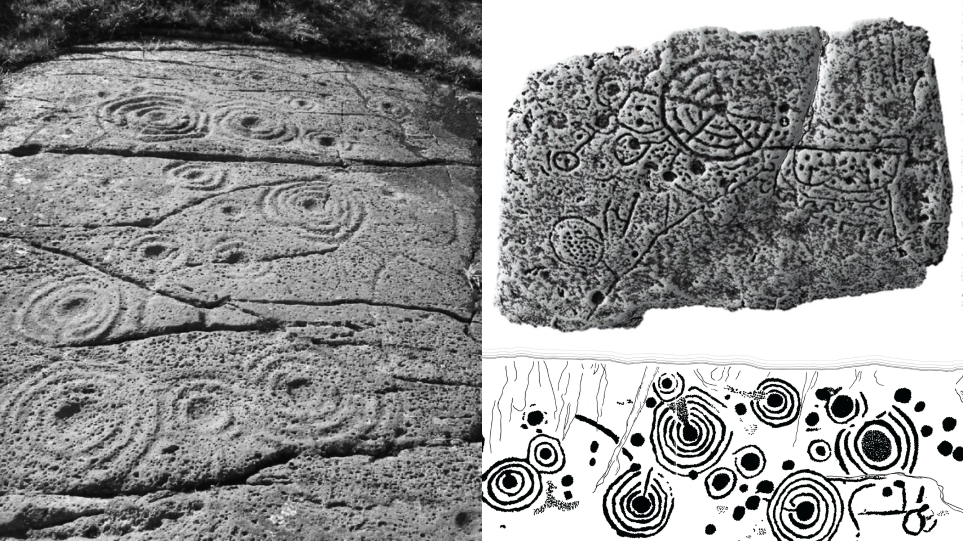
_ Examples of Atlantic Rock Art
> PLACE MEMORY
Recently, after a deeply miserable seventeen-year stint, I moved from Berlin to a small town in northern Portugal, and I’m shocked at how much joy this simple change has brought me. Growing up around Ceredigion and Kernow, among other less magical places, left me with a stubborn belief that the Atlantic is, in fact, magic. (Including the Irish Sea — don’t get petty.)
For years, this was just a feeling — some kind of felt knowledge lacking foundation. Then, a few years ago, I stumbled across the work of Portuguese archaeologist Joana Valdez-Tullet, specifically her 2019 thesis Design and Connectivity: the case of Atlantic Rock Art, in which she posits:
“The presence of shared practices across such widespread regions suggests the establishment of cultural relationships and consistent long-distance contacts during Prehistory.”
Valdez-Tullet argues that the Atlantic coast wasn’t so much a fringe of isolated peoples but something more like a network. Tides of ideas and symbols flowing like Awen. People travelled. Meaning travelled. A striking prehistoric model of connectivity that isn’t about borders or bloodlines, but about shared practices carried across water — a kind of cultural animism carved into stone.
Her work focuses on Portugal, Galicia, parts of Ireland, Scotland, and England, but the idea of an Atlantic network resonated far beyond her sample regions for me. It suggested, if only in my mind, a possibility I’d always felt: that Cymru, Kernow, Alba, Éire, Breizh, and Galiza might share deep echoes of a cultural language shaped by the ocean itself. I feel it in the valleys and mountains here, the rugged coastline of northern Portugal, the Lizard Peninsula, and my beloved Ceredigion. Though I’ve never been to Galiza, Alba, Breizh, or Éire, I imagine I would feel the same. This is a place memory.
_This is Atlantic lore.
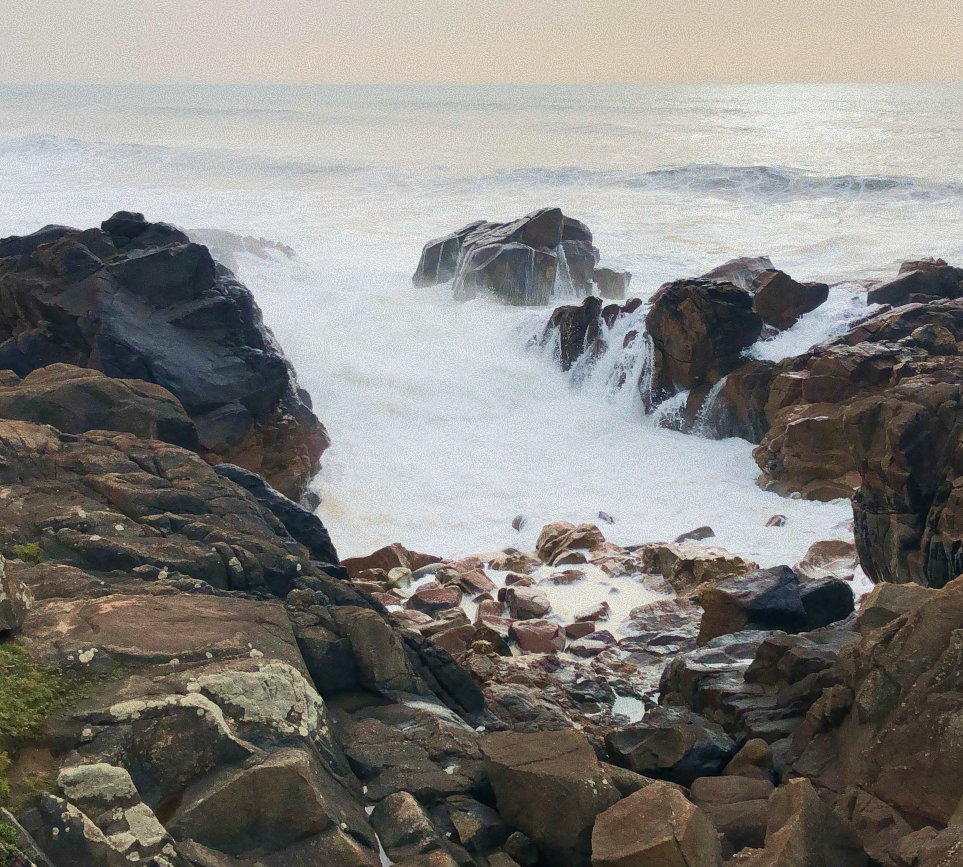
_ The Magic Atlantic, somewhere between Mindelo and Vila Chã
> EVERYTHING TOUCHES EVERYTHING
Through rave culture, record collecting, and nature worship, what I keep coming back to is that none of this needs to point toward some kind of techno-utopian dream or 8mm resurrection of the past. What I glean hope from is the way things touch: communities, ideas, sounds, people, and nature. Spirituality, for me, isn’t a lineage to preserve or a technology to master; it’s something lived in the cracks between material things — in the bassline that rattles your chest, in a mountain that feels like an old friend, in the small rituals that weave us together.
For me, nature worship isn’t so much a set of rituals or rules. I’m simply trying as best as I can to be present. Treating the rivers, mountains, coastlines, buzzing pylons as beings rather than scenery. A kind of everyday animism. And some ‘beings’ are more important to me than others. There is a tree in the centre of Tempelhofer Feld, Berlin named Sylvia, she is a friend, she is also my grandmother, she got me through lockdown. I take solace in the belief that the world isn’t made of objects but relationships, and that paying respect and transmitting it, is its own small ritual.
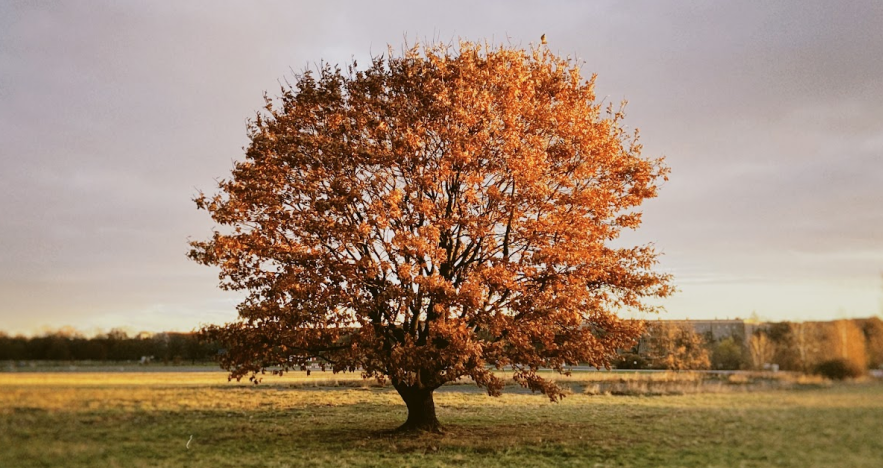
_ Sylvia looking stunning at sunrise // 52°28'25.5"N 13°24'47.2"E
I’m drawn to both Druidism and Paganism because they remind me that the world is relational — that meaning grows between things — and that life feels richer when you refuse to see nature and culture, matter and spirit, past and present as separate.
I focus on the Atlantic only because it’s the world I inhabit and understand. But this sense of animism, timelessness, haunting, and oneness echoes across countless cultures: the Ubuntu philosophy of the Bantu, the Kachina spirits of the Hopi, the personhood granted to rivers and mountains in Māori belief, the Kami of Shinto. The list could go on forever.
What survives — what remains — are the touchpoints:
a record groove cut into salt and oil;
a spiral pattern etched across the Atlantic;
phantom mist dancing on the river;
Or a moment of collective ecstasy dancing to Sweet Harmony in a dodgy old warehouse.
_Everything touches everything else.
// It’s all around you.
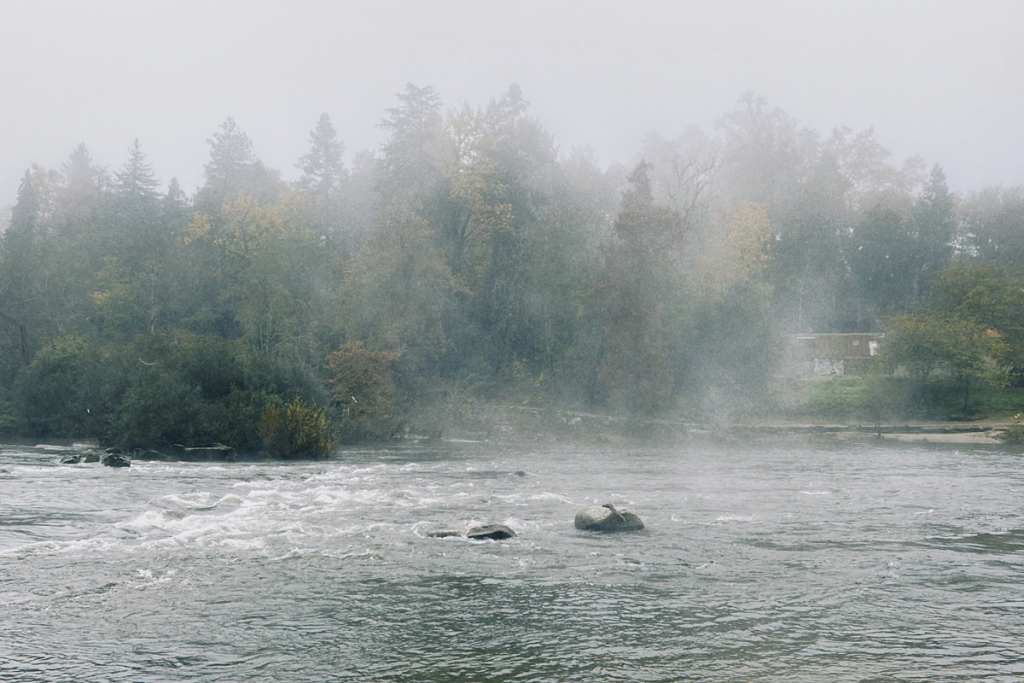
_ Ghost Dancers on the Tâmega
> BONUS LEVEL / FREE STWFF
Rooting around in a bunch of old tapes, WAVs, and bits and bobs, I found this demo of a little ditty called In-Between-Things-Demo, which I vaguely remember recording on a rainy day in Penryn, Kernow, around 2005, under the long-ignored moniker J. Niwl.
As we’re launching our Time Ghost imprint next year, and since it fits the mood of this article, I figured I’d put it up as Free / Pay What You Want on the Time Ghost Bandcamp.
There are a couple of similarly horizontal bits I’ll throw up there soon…