
Review: Bugonia
Read Time: 6 mins
Film: Bugonia (2025)
Directors: Yorgos Lanthimos
Starring: Emma Stone, Jesse Plemons, Aidan Delbis, Stavros Halkias, Alicia Silverstone
Soundtrack: Jerskin Fendrix
Genre: Sci-Fi, Dark Comedy
The world is falling apart. It’s not just the bee colonies collapsing, but ours too — and maybe that’s not such a bad thing. At least, that’s the premise of Bugonia, Yorgos Lanthimos’ reimagining of Jang Joon-hwan’s 2003 dark sci-fi comedy Save the Green Planet!. A modern fable about internet conspiracy, power, and the traumas that seep into both, Bugonia captures the weirdness of our moment: incels and corporate culture, abuse, and the neglect that feeds it. Lanthimos distils all of this into a brutal, darkly funny two-hour experience.
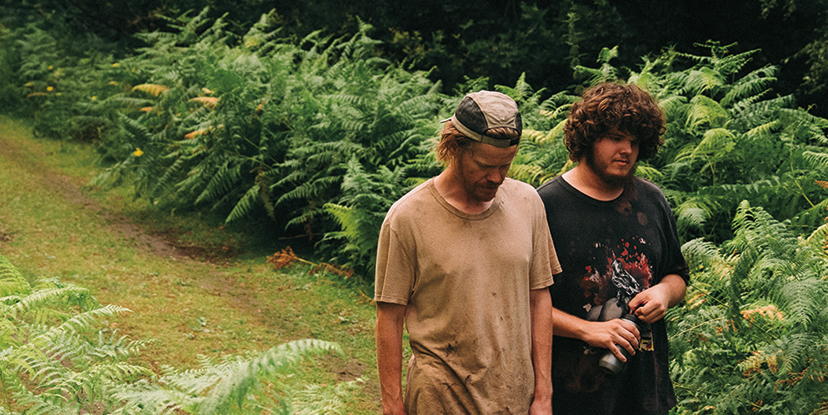
_ Teddy and Don discuss plans
In Bugonia, we follow a few days in the lives of cousins Teddy (Jesse Plemons) and Don (Aiden Delbis). Teddy has a plan: to abduct an Andromedan royal courtier, board her spaceship, and convince the alien leaders that humans are, in fact, intelligent creatures worth engaging with on equal footing. He must do all of this by the next lunar eclipse — in three days, naturally. He’s done his research. The courtier in question is Michelle Fuller (Emma Stone), CEO of the medtech company Auxolith: rude, controlling, and entirely self-interested. As luck would have it, Auxolith is also the very company where Teddy works — albeit in the distribution centre, an Amazon-esque hellscape.
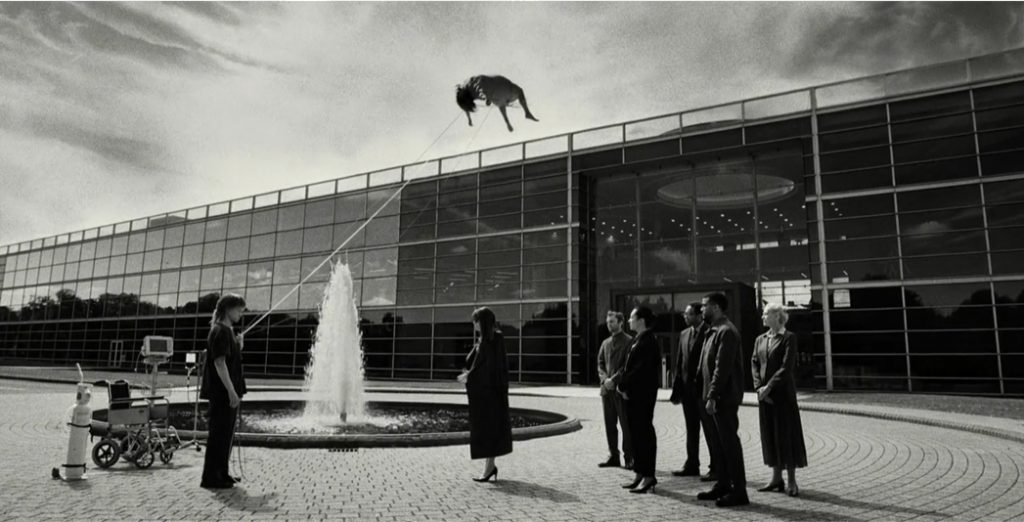
_ Teddy's dream sequence
As Teddy and Don’s story unfolds, we find ourselves mired in mystery. Is Teddy, as Michelle suggests, mentally ill? Or is he actually on to something? Are we being actively controlled by otherworldly interlopers, made increasingly atomised like a collapsing bee colony? We know his paranoia has roots. His mother, Sandy Gatz (Alicia Silverstone), an addict, lies in a coma — a guinea pig in a botched Auxolith trial, her body already colonised by the Auxolith’s experimentation.
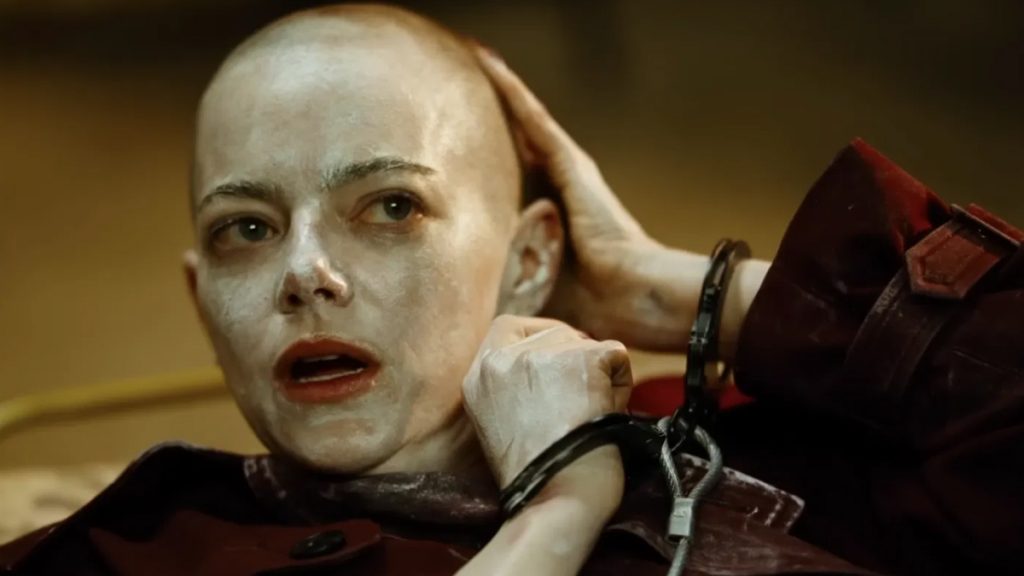
_ Michelle wakes up in the basement
Jerskin Fendrix’s score does much to illustrate Teddy’s manic mindset, switching between almost Wonka-esque flutes, bold brass, and psychotic stabs. Compositions like Bees have an ambient, dreamlike quality, verging on Hovis advert territory — my own personal utopia. In contrast, tracks such as Tell Teddy I’m Sorry and Saliva Antifreeze encompass brain-shattering brass hits and massive crescendos that synchronise perfectly with the onscreen action, at times giving the film the feel of a chaotic circus act. When Teddy loses his cool with Michelle for the first time after she calls him mentally ill, the music erupts in frenzied brass, heightening the sense of unrestrained chaos.
_ Casey comes around
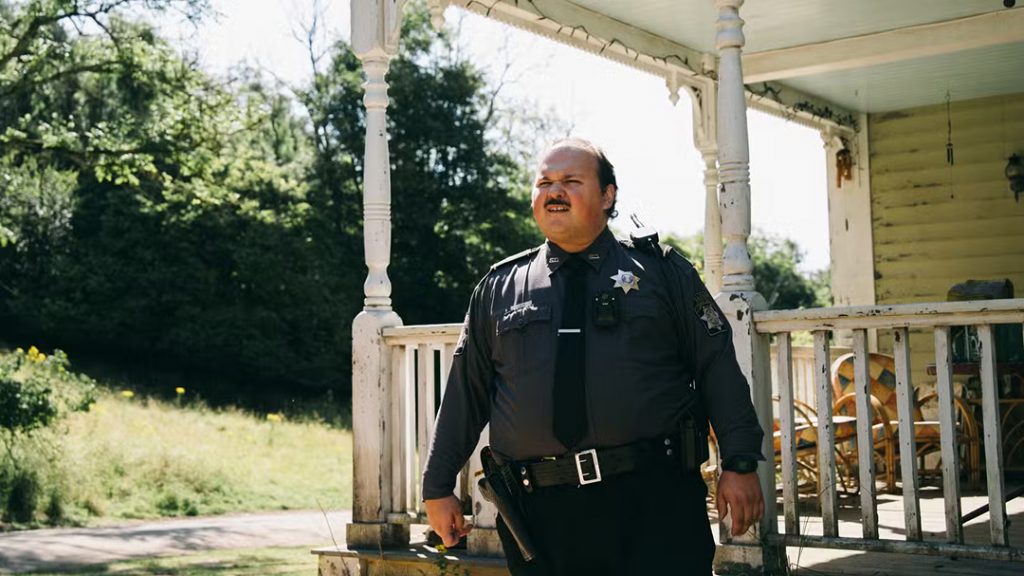
Lanthimos’ approach is cast-lite; we mostly meet only Teddy, Don, Michelle, Sandy (largely in dream sequences), and a local cop, Casey, played by Stavros Halkias, who seems almost placed as a device to stir things up in Teddy’s head — to poke the bees’ nest. A man in uniform. A man with authority. Yet also dim-witted, unfit for duty, and incessantly alluding to some past incident: “I know I wasn’t always the best babysitter back in the day, but, um… I do want you to be okay.”
Face acting is central to how Lanthimos wants us to view this world. There are many close-ups. During the post-abduction basement scenes, after Teddy and Don shave Michelle’s hair to stop her communicating with the mothership and cover her in “a thin layer of antihistamine” to weaken her powers, she is almost always seen from above, through Teddy’s eyes. From this angle, she looks convincingly alien: her forehead and eyes unnaturally large, her mouth and chin almost disappearing. And so we see her as Teddy does.
_ Teddy races to save his mum
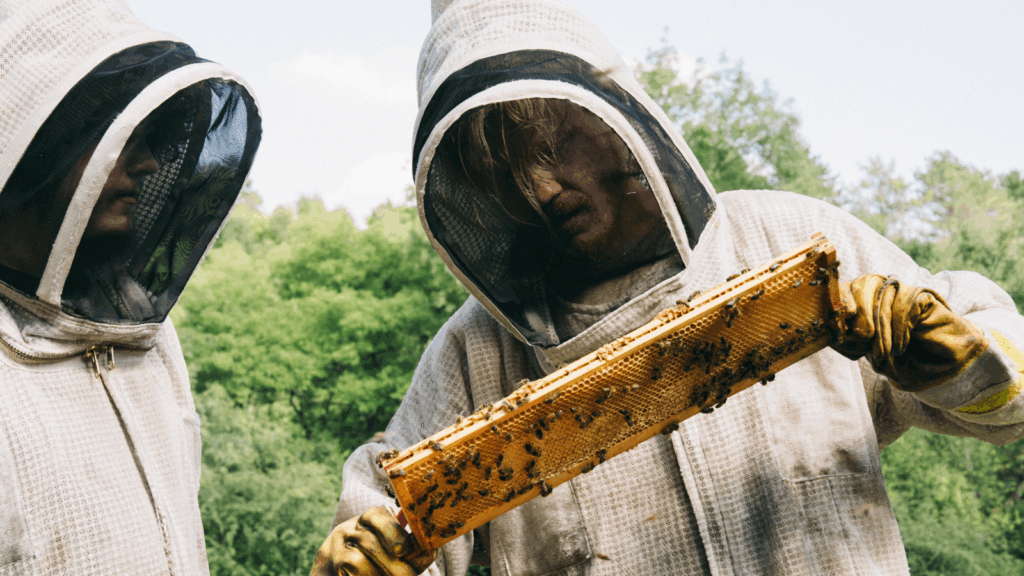
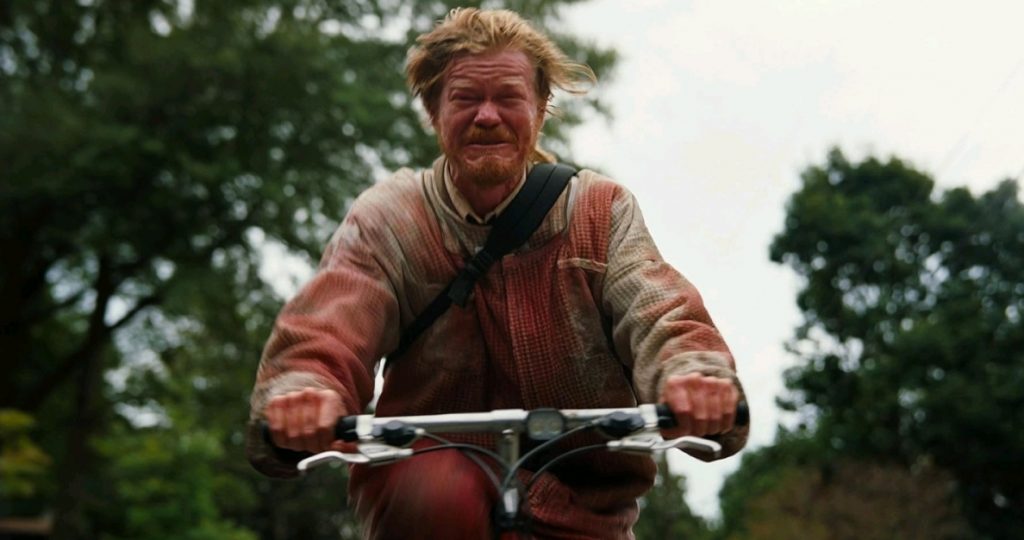
Plemons’ facial acting is second to none. At times, it seems like every pore is bursting with desperation. In one scene, racing through town on a bicycle, his beekeeper suit caked in blood, rushing to his comatose mother’s bedside with what Michelle promises is “a cure,” the desperation is monstrous and manic. A face of pure agony. A Francis Bacon–style nightmare.
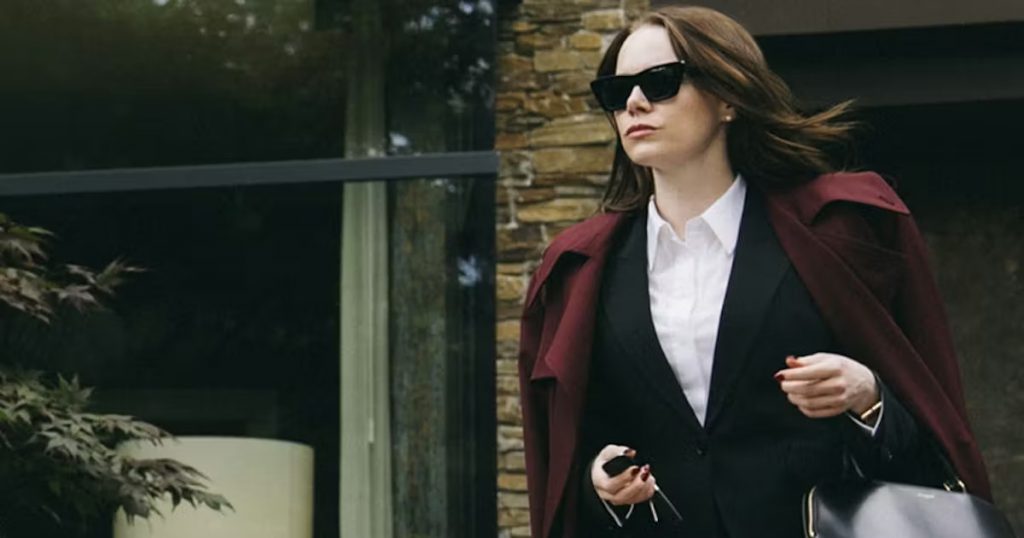
Like the score, this is a world of almost cartoon-like contrast. Wry humour clashes with brutal violence. At the beginning of the film, we are treated to pastoral landscapes — Teddy and Don’s world, a rural American idyll. Wild, alive, flowers blooming, and bees pollinating them. And then we see Michelle’s world: all grey, corporate and metallic, as regimented as her life. The only vivid dash of colour comes from her Louboutin heels and LED face mask.
In an almost Lynchian move, the opening pastoral scene is immediately undercut by an ominous tone in Teddy’s narration as he explains his ideas to Don: “The bee gathers pollen and deposits it in another flower’s stigma. It’s like sex but cleaner. And nobody gets hurt.”
The film plays with internet tropes, leaving you guessing for at least half the film about Teddy’s true motivation: an incel? A MAGA freak? An eco-warrior? Later, he explains: “I ran through the whole digestive tract in… five years? Alt-right, alt-lite, leftist, Marxist. All those stupid badges. I went shopping hungry, and I just bought the whole store.” Teddy is horseshoe theory made flesh, an amalgam of unverifiable YouTube videos and personal trauma.
_ Don has doubts
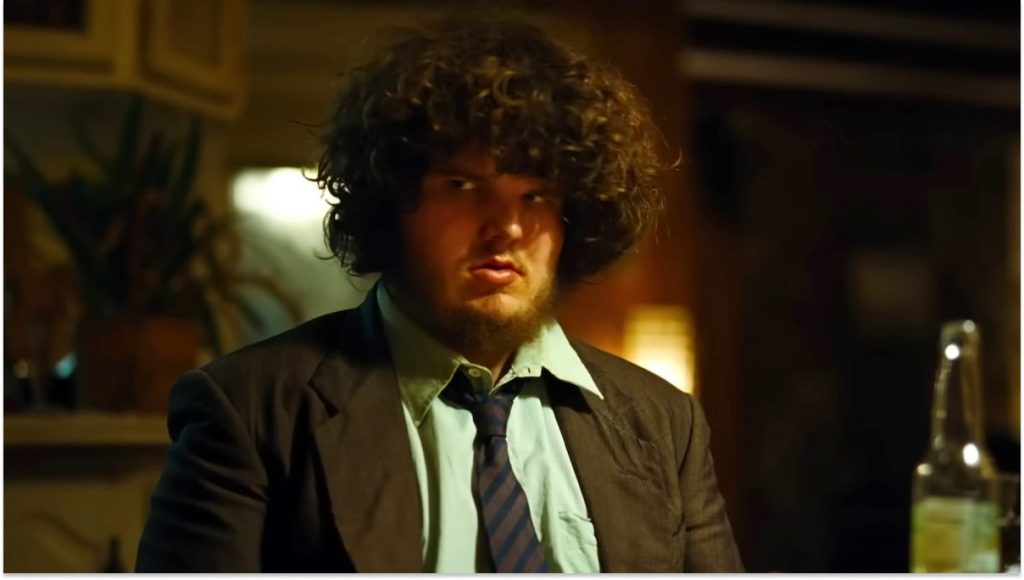
Don is another contrast. Where Teddy and Michelle are locked into their immovable worldviews, Don questions everything around him. He doesn’t buy everything Teddy tells him. The only truly good person in the film, his motivation is love for his cousin, even going so far as to let Teddy chemically castrate him after being told, “Once you kill the urges, like I have, you’ll be your own master. No one can fuck with you. You’ll be totally free.”
Their relationship is complex. At times, it’s hard to tell whether Teddy is manipulating Don or genuinely drawing him into his story. Power dynamics are central, particularly between Teddy and Michelle. Teddy’s power comes from frantic, often uncontrollable and violent outbursts. Michelle’s, in contrast, is cold, calculated, passive-aggressive, and tightly controlled. She is the antithesis of Teddy: deliberate where he is impulsive, composed where he is chaotic, and very much the source of his ire. But is she really an alien, or just another tech CEO?
_ Michelle before the abduction
I won’t include spoilers this time. You can watch it for yourself if you haven’t already. What the film ultimately does so well is make us the aliens. It takes a cold, hard look at our weird little planet — and our even weirder species — with all our foibles, our constructs, our money, our power relations, our aggression. It wraps all of this into a tight little ball of frustration and fires it back at us, asking: if our colony collapsed, would it really be so bad?
I think not.
As long as the dogs are OK.